

Review General Partner:

Review Partner:

""Retail as a field of economic activity, experts interviewed by us note, has a high level of digitalization of business processes. This applies to both administrative and process activities. The high penetration rate of the "figures" is also shown by warehouse and transport logistics.
The financial prospects of the market on the horizon of 2-3 years are evaluated by experts contradictory, but most of them are of the opinion that the growth of the market as a whole will continue, while not due to import substitution, although the process of exit of foreign vendors from Russia will continue. "
Experts note that modern Russian retail is one of the most automated and digitized sectors of the economy. The digital circuit of retail in general and each enterprise in the industry is formed by accounting systems and specialized (process-oriented) solutions. This ensures operational sustainability, adaptability, and business growth.
It should be noted that digital technologies significantly reduce operating costs in some areas, for example, in the segment of procurement planning, logistics, warehouse storage.
1 Summary of 2024 results
2024 was a year of accelerated digitalization for Russian retail, which resulted in a significant increase in turnover, especially in the online segment, and significant investments in IT. According to expert estimates, both the turnover of the largest retailers in Russia and the volume of the digital transformation market as a whole were growing. The trend of previous years remains on the market: growth by an average of 20-25% per year. The main growth drivers were the development of e-commerce and cloud services. Consolidation, mergers and acquisitions of major players also supported the growth of the segment.
According to General Director Novardis Igor Malyshev, import substitution remains the key driver of development, stimulating demand for domestic technologies.
{{quote 'At the same time, the market is faced with challenges: despite the expansion of the line of Russian solutions, some niches remain unfilled - customers note a lack of full-fledged analogues of Western systems and components.
Domestic vendors, in turn, perceive this situation as an incentive for development and are already offering more and more complex and complex solutions, gradually closing the existing technological gaps, - said Malyshev. }}
The market not only grew, but also changed qualitatively, betting on digital technologies as a base for further development, setting a new level of requirements for IT architecture and data management. Companies have actively invested in omnichannel models, logistics automation, the introduction of AI to personalize proposals and optimize business processes. The technological leap in the FMCG and fashion retail segments is especially noticeable, where the struggle for the client requires the rapid introduction of new solutions.
AI has become a key tool for a number of business processes, such as personalization. Developing solutions for self-service, robotization of warehouse and logistics operations, digital platforms for managing assortment and pricing.
 | According to our data, the total retail turnover increased by 6-8%, while the highest dynamics is noted in the online segment - an increase of 60% compared to 2023. Marketplaces continue to strengthen their positions, increasing sales by 60-70% year-on-year, - said Nikita Ananyev. |  |
Gennady Tarantasov from Korus Consulting Group of Companies: {{quote 'Since mid-2024, we have observed market compression associated with the key rate of the Central Bank - most retailers have stopped investing in IT projects, especially with a delayed economic effect. }}
In the context of changing consumer behavior caused by economic realities and technological progress, companies actively introducing digital solutions demonstrate better indicators compared to less technologically adapted players, says Evgeny Stoyakin from Krayon. One of the main financial drivers in 2024, the expert emphasized, was the continued growth of the e-commerce sector. At the same time, the share of digital sales channels is increasing, they appear even among traditional offline retailers who are actively developing their own online platforms or collaborating with large marketplaces.
The Russian retail market continues to adapt to the economic conditions associated with geopolitical instability, sanctions and changes in supply chains. There is a decrease in demand in the premium segment of goods, on the other hand, imported goods are being replaced and the segment of Russian brands and manufacturers is growing. Market adaptability is also characterized by the introduction of flexible logistics strategies.
Maxim Semirenko, Deputy General Director for Business Development and Sales of Imredi, notes the trend towards enlargement, absorption of companies by the strongest players. The market does not rely on new technologies and approaches, but on the implementation of projects, the introduction of existing technologies.
The market for digital solutions for logistics in retail is showing steady growth, says Ilya Shilov from Consid. The reason for this is the introduction of new requirements into the legal field (some of them are mandatory or will soon become such - ed.) For labeling goods and the need for integration with the Honest Sign system, which makes the use of WMS systems almost mandatory - without automation, it is simply impossible to control the movement of marked goods and comply with the law. In addition, active robotization of warehouse processes based on AI technologies also has a stimulating effect on the segment.
! Interviews with experts
How "Lehman Pro"
is rebuilding IT
Nikolay Knysh,
"Lehman Tech"

How Russian Auchan copes with the departure of Oracle and other foreign vendors
Vera Emroth,
"Auchan Tech"

Marketplaces "eat away" the market, but retail has something to answer
Gennady Tarantasov,
KORUS Consulting Group of Companies

Buyer data is new oil
Maria Mironovskaya,
Set Loyalty

₽ Largest IT suppliers in retail
The new rating of the largest IT suppliers in retail at the end of 2024 gathered 81 participants. Among them are both developers of software and hardware solutions and system integrators. The leader was Softline with revenue exceeding 33.6 billion rubles. The top five also included companies such as Evotor, ATOL, ICS Holding and GC Avtomakon.
The total revenue of all participants in the rating exceeded 130 billion rubles.

In addition to the overall rating, TAdviser has collected a separate rating of vendors whose products are most actively implemented by retailers. This rating was topped by ICS Holding. In addition to him, the Automacon Group of Companies, Evotor, Tensor and Ivideon are included in the top 5.
2 What IT solutions retail uses
According to Gennady Tarantasov, director of retail practice and FMCG of KORUS Consulting Group, the level of ERP penetration in the industry is close to 100%. Almost all large retailers have been using this class of systems for a long time, but in recent years, many companies have begun to launch new ERP projects. The main reasons are connected either with the opening of new business areas (new networks, new formats), or with the fact that the current system is running out of life cycle. Increasingly, a new problem arises: even modern ERP systems (including Russian ones) do not always allow you to quickly and flexibly adapt to business tasks. Performance difficulties are observed, problems arise due to outdated IT architecture. Also, many companies use ERPs implemented 10-15 years ago, which have been heavily modified, and now it is extremely expensive and technically difficult to change them.
Nikita Ananyev, head of the project department of First Bit, notes that most ERP systems operate on the 1C platform, and solutions are used on other domestic and foreign platforms. In recent years, the expert says, many companies have shown high interest in switching to new generation systems. This is due to external requirements: the need to comply with product labeling requirements, changes in tax legislation and other convergent processes.
| | Accounting systems and ERP solutions can already be called the basic standard for large retailers, since they set the foundation for accounting, planning and management of basic business processes. They are used almost everywhere, especially in large network companies, where integrated accounting solutions allow not only to keep records in real time, but also to increase the transparency of all operations and minimize costs, "summarizes Evgeny Stoyakin, head of customer service at Krayon. | |
Experts also note a new trend - the transfer of individual business processes from ERP to specialized information systems, more adaptive, modern and effective.
With the growing organizational complexity of companies (merger and acquisition transactions, the development of the retailer's multi-format, etc.), there is a growing need to manage "administrative" business processes, such as document coordination, working with internal applications, administering changes and the like. For these tasks, trading companies use CRM, BPM and Low-Code/No-Code platforms, which contributes to accelerated automation, since such solutions allow business users to independently configure and run IT solutions. At the same time, against the background of a shortage of specialized solutions, Low-Code/No-Code platforms are often used to automate more complex tasks than their internal structure provides. This leads to problems with system performance, scaling, and stability.
In addition to ERP, CRM and SRM systems have gained significant distribution.
SRM systems (Supplier Relationship Management, specialized software for automation and optimization of supplier relationship management - ed.) Become extremely important for retail, especially in the context of inflation and rising logistics costs. There are few solutions of this class that take into account the specifics of retail on the market, here, as experts note, there are growth reserves.
BI-systems, according to experts, are becoming more and more popular in all market segments, which is facilitated by the presence and availability of Russian software products comparable in capabilities to foreign counterparts.
{{quote 'Market leaders have achieved a very high level of process automation with ERP, CRM, SRM, BI. BPM solutions are actively included in the landscape in order to quickly low-code the development of customized functions for which there are no industry solutions.
In small and medium-sized networks, the basic functions of ERP, CRM, BI are implemented, in terms of BPM solutions, the demand is mainly for ready-made, pre-configured solutions (for example, in the field of EDO), - notes Igor Malyshev, CEO of Novardis.}}
The use of AI in retail has not yet become an everyday practice, experts expect the mass use of artificial intelligence technologies on the horizon in 2-3 years. Individual trading companies locally introduce AI technologies for forecasting, making recommendations, forecasting out-of-stock (availability of commodity items - ed.).
! Current projects



3 What interesting developers offer the market
Roman Sokolov, Director of the Wholesale and Retail Department of Reksoft, notes a wide range of IT solutions in demand in the retail market. These include AI and predictive analytics for accurate audience segmentation and demand forecasting, automated inventory management systems already used by 67% of large networks, computer vision for organizing the work of self-service cash registers and monitoring cash transactions, as well as integration of online and offline sales channels and targeted advertising based on Big data.
Evgeny Stoyakin from Krayon notes that in the context of ongoing sanctions pressure and restrictions on the use of foreign technologies, Russian companies are actively replacing foreign software products, offering similar or improved solutions.
| | I would like to point to key trends in the field of omnichannel platforms that help integrate offline and online trading into a single ecosystem. Such platforms allow you to seamlessly connect the work of online stores with physical stores, improving the customer experience. The introduction of chatbots and voice assistants simplifies communication with customers, both in online stores and offline points. Do not forget that with the growth of digitalization and online trading, the key issue remains the security and integration of specialized software to protect retailers from cyber attacks aimed at both global IT systems of companies and mobile applications, the expert said. | |
In the developer proposal palette, Sergey Tinyakov, partner of the Digital Economy League, drew attention to niche products that automate a separate area, for example, pricing, demand forecasting, product management and others.
Yuri Perestoronin, Managing Partner of the TNP, Retail, Construction segments of IBS, notes augmented (AR) and virtual (VR) reality technologies as new ways to interact with products and improve customer experience. The field of application for these technologies is commodity groups that are associated with the direct contact of the buyer with the product.
Another important area of digitalization of trading activities is logistics. Retail has long become one of the leaders in the digitalization of logistics: it was here that WMS systems for warehouse management first appeared en masse (WMS, Warehouse Management System - warehouse management system, a specialized software complex that automates and increases the efficiency of all processes in the warehouse), and then TMS for transport logistics and Yard Management to control flows in warehouses. Now these solutions are considered mandatory for the effective operation of any large trading network.
In recent years, says Ilya Shilov, technical director of Consid, additional tools have been actively introduced in the last link of the supply chain - retail outlets: systems for automatic layout of goods, inventory, analysis of supplies and generation of car orders. Solutions for assembling Internet orders are especially in demand, which is critical for large networks with developed e-commerce.
Due to the lack of personnel, the expert notes, the market for automated and robotic systems is growing very quickly. There are already successful pilot implementations, among them: automated systems for selecting goods from racks, sorting systems, palletizer robots, stackers and packers. So far, such solutions are quite expensive, but over the next 5 years, technology is expected to become more accessible and widespread.
! Current solutions
4 Customer Requests
Customer companies, according to most experts, want IT solutions not only to meet their current needs, but also to create the basis for stable growth and competitive advantage in the market. They are waiting for an integrated approach: from technological innovation to direct support, taking into account real business needs. The main areas of internal systems development include automation and optimization (reduction of the volume) of standard processes, improving the quality of customer experience (shopping personalization programs, chatbots and online platforms for interacting with users), comprehensive analytics of internal data and ecosystem in terms of integrating their own set of IT solutions.
{{quote 'As part of the transition to domestic solutions, customers primarily expect to maintain the level of manageability and data quality achieved when using Western systems, says Igor Malyshev. - The key demand of the market is not just a software replacement, but minimizing efficiency losses when switching to new platforms.
The greatest demand today is observed for auditing the IT landscape and business processes - to form an import substitution strategy without compromising operational activities, as well as Carve Out projects - as the starting stage of localization, which allows you to highlight and transfer critical functions.
At the same time, a steady trend for the implementation of 1C ERP as the main alternative to Western ERP systems is clearly traced. This is a natural choice due to the maturity of the platform and its adaptability to the requirements of Russian business.}}
Roman Kuzmin, head of the AGIMA project office, noted the revival of the market in 2025 after a decrease in the number of project requests from retail customers a year earlier. Outstaffing and outsourcing are developing - more and more companies are ready to strengthen their teams with external specialists. Often it is not just about creating web or mobile applications, but about more complex digital services that require expert knowledge, which internal teams may not have.
| | In the case of finished niche products, customers often note a gap between expected and actual results. Companies believe that in their IT landscapes everything will work as beautifully as at the demonstration, but life is making its own adjustments. It turns out that the customer, for example, receives automation not of the entire business process, but only of some segment of it. This is usually due to a shortage of data or their distortion in preparation, the specifics of the implementation of the business process or the need to enrich data with information from related areas, the expert notes. | |
! Digitalization of large Russian retailers
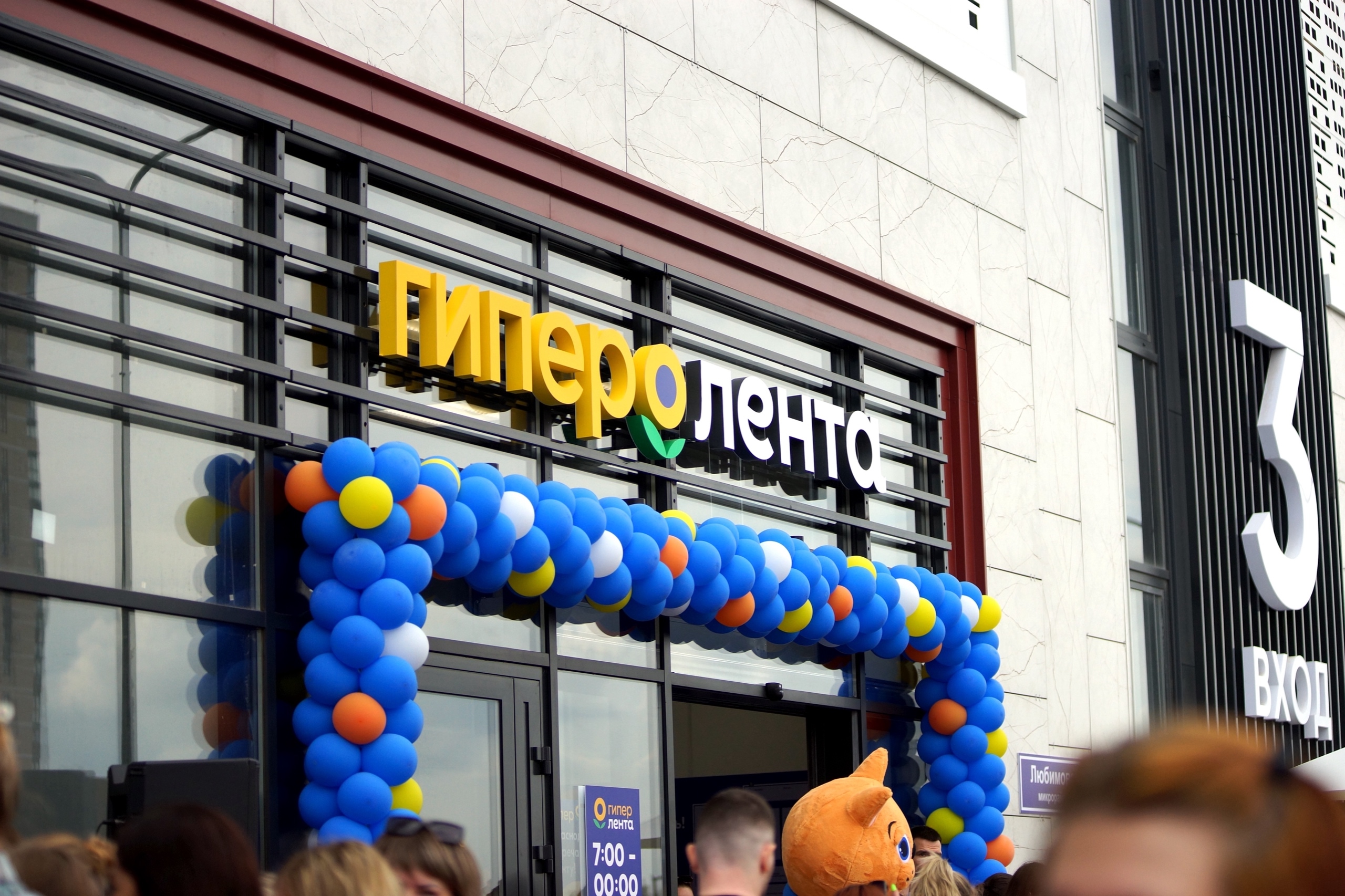
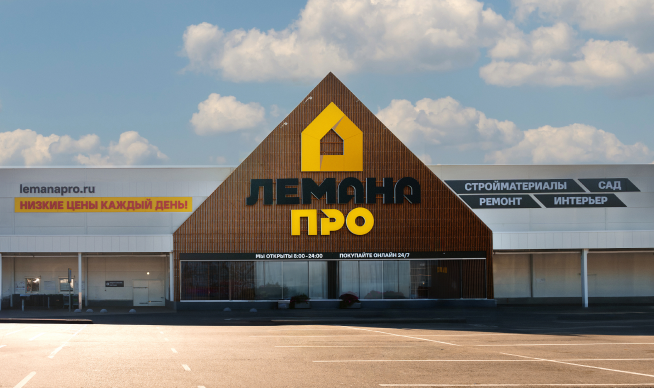
Read about how digitalization processes are going in key retailers in Russia in a separate selection.










5 Presence of foreign vendors in the market and their share
According to experts, import substitution in retail has not become a universal imperative. The main criterion is economic feasibility. There are cases when after 2022 companies continue to use or even implement Western solutions that have left the market, because it is faster and cheaper than adapting some Russian analogues. It is quite difficult to name the exact share of foreign vendors in the market - it all depends on the class of systems, the retail segment and the size of the companies.
According to Igor Malyshev (Novardis), almost all retail market leaders continue to use solutions from SAP for ERP, the import substitution process is carried out in terms of specialized solutions (CRM, WMS, TMS, data buses, BI). Some of the customers are working to facilitate SAP- systems, bringing especially heavy functions to microservice platforms or specialized IT solutions.
| | Many retailers have adopted an architectural introductory: if there are adequate alternatives, the new requirements must be implemented not in SAP, but in import-substituted software, in particular on the basis of 1C, the expert explains. | |
In the field of AI implementation, Chinese vendors have a strong impact on the market.
Despite the economic difficulties and sanctions, notes Yuri Perestoronin from IBS, foreign vendors maintain their presence in the Russian retail market. However, they have lost their dominant position in the market, the leadership is moving to Russian solutions, which make up more than half of the market with a tendency to increase their share.
| | It should be noted that as such there is no trend for mass import substitution. Foreign solutions are replaced by domestic solutions as licenses are completed, systems become obsolete, needs mature, IT infrastructure condition and development, and so on. Today, companies more often choose domestic software to replace, says the expert. | |
6 Technological Perspectives
The development of specialized solutions for retail in Russia began a long time ago and is successfully developing, at least in the range of offers from the developers. At the same time, in complex and niche segments, such as auto-order, pricing, assortment management, the situation is somewhat different. In each of these niches there are solutions tested and accepted by the market, there is an increase in the number of successful implementations.
Some developers strive to use a platform approach: they create platforms that cover several related areas at once, which include a secure IT infrastructure, personalized communication channels, business analytics tools and modules with elements of artificial intelligence. At this stage of development, vendors are primarily trying to develop those modules for which there is the greatest demand.
In the coming years, companies will be even more active in introducing AI technologies, automating routine tasks, reducing manual labor - all this will ensure the growth and development of the digitalization market.
Key areas will be the personalization of client experience based on LLM, the development of digital twins to optimize logistics and inventory, as well as the introduction of robotic solutions for warehouses and stores.
Voice assistants based on NLP technologies, mobile applications with self-service functions and predictive analytics for forecasting demand will be actively developed. Particular attention will be paid to integrating new solutions with the historical IT landscapes of companies to ensure "seamless" digital transformation.
In 2025-2027, experts expect a massive introduction of generative artificial intelligence in the retail market, the development of autonomous stores and the active use of robotic solutions. By 2027, autonomous trading floors will become the norm for most million-plus cities. In parallel, the mass release of new AI solutions will begin, which will occupy the niche of the departed Western technologies.
{{quote 'In the next 2 years, Russian retail expects an intensive technological transformation, where the main competitive advantage will be the depth of the introduction of artificial intelligence and automated solutions. The industry is moving towards a model where the speed of decision-making and the accuracy of business processes will determine the success of companies in the market.
Central to this transformation will be the comprehensive application of artificial intelligence and big data technology. These solutions will not only optimize traditional operations - from inventory management to logistics, but also bring to a new level the personalization of interaction with customers. We will see a transition from standard loyalty programs to intelligent systems that can predict and form individual consumer preferences in real time, "says Igor Malyshev, CEO of Novardis.}}
At the same time, as the expert notes, these technological changes are not point, but systemic. Companies that can build a holistic digital ecosystem that combines analytical, automated and customer-centric solutions will have a significant advantage. Already in the medium term, we will see a redistribution of market shares in favor of those players who will make the most effective investments in digital transformation.
The emergence of new technological trends in retail is noted by Sergey Tinyakov: this is the introduction of computer vision systems to optimize the display of goods and the organization of the work of self-service cash desks, and the use of neural networks to predict demand and improve marketing initiatives, and the development of interactive assistants and smart search for the selection of goods.
Yuri Perestoronin from IBS calls the Internet of Things (IoT) for automatic management of warehouses and inventories, as well as blockchain, as technologies that will find use in retail in the near future. The technology will be used to increase the transparency of supply chains and control the authenticity of goods.
7 How the customer's ideas about the ideal system for digitalizing retail are changing
Among retailers, there is no unanimity in choosing a digitalization strategy: with the overall growth of the market, the margin of trading operations is on average low, and the cost of IT should be accurate, calculated, with the goal of reducing costs. In addition, they must take into account the specifics of the business of a particular retailer both now and in the near future, that is, to coordinate with the development strategy of the enterprise.
Most of all, IT customization is responsible for developing your own solutions. This, however, is the "path of the chosen ones," the largest companies in the segment that can afford the costs of maintaining in-house developers. The advantages are the necessary level of quality and flexibility of solutions where the market does not offer mature alternatives.
Many retailers use Russian solutions and modernize individual elements. In this category, implementation is often carried out on the basis of domestic low-code/no-code or BPM platforms. The application architecture allows the necessary improvements to be made, sometimes even without the involvement of third-party developers. The disadvantages of this approach are insufficient performance and weak scalability.
The combined approach involves the use of ready-made solutions and own developments, which requires a mature IT team and a well-thought-out IT strategy.
| | Today, in the context of the transition to domestic solutions, there is a paradigm shift. Organizations are increasingly adopting the best-of-breed strategy, choosing the most effective specialized solution for each specific task. This creates a new complexity - the need to integrate heterogeneous systems from different manufacturers into a single working circuit, says Igor Malyshev. | |
According to Nikita Ananyev, customers' ideas about an ideal system in 2025 are shifting towards flexibility, modularity and quick payback. What comes to the fore is not just the automation of current business processes, but the use of AI to predict customer behavior, dynamic pricing and optimize assortment.
Customers expect digital systems to quickly integrate with existing platforms, support for omnichannel (unified online and offline customer profiles), and high data security. The presence of "smart" interfaces becomes important: from NFC storefronts and virtual fitting rooms to voice assistants for staff. Increasingly, companies are focusing on solutions with fast payback on the horizon up to a year and the ability to gradually scale as the business grows.
Most experts agree that customers' ideas about an ideal retail digitalization system can be reduced to three main parameters:
- Cost-effectiveness and payback in a short time, maximum within a year.
- Connecting the automation of routine business processes, reducing and replacing personnel with robotic systems and fighting for the preservation of personnel, since most retail chains have big problems with staffing.
- Verified quality data and analytics.
Yuri Perestoronin, on the contrary, notes that customers prefer comprehensive approaches that integrate different parts of the business. If earlier customers focused on automating individual processes (for example, cash transactions, warehousing), now they focus on the need for a comprehensive digital transformation of the entire business. An ideal system in their views should cover all aspects: from supply chain management to marketing and customer service. In addition, full compatibility with other systems (CRM, ERP, WMS) and marketplaces is required, which allows you to automate processes, exchange data and expand sales channels.
With regard to WMS systems, Ilya Shilov reports, customers are increasingly looking for a flexible digital platform that easily integrates with different equipment and technologies. Cross-platform, support for Android devices, the ability to connect Pick-to-Light, Pick-to-Voice (automated systems for highlighting the location of goods and voice selection of goods in stock, respectively - ed.), Conveyors and robots become important. The demand for solutions for integration into a single WMS, ERP system, automated equipment and synchronization of their work is growing.
In addition, customers are waiting for tools to optimize transport load and task management to speed up and simplify order assembly.
There are solutions on the Russian market in all areas: accounting, CRM, ERP, BI-systems, SRM, WMS, said Vyacheslav Predybailo, director of industry solutions management at Evotor IT company. The expert notes differences in approaches to digitalization depending on the size of the retailer's business. Representatives of large retail require that the solutions being implemented adapt to the specifics of the network's business processes. Among their requirements: speed of rework, high-quality technical support and system maintenance and quick response, monitoring of work and solving problems in a remote format.
| | Medium retail is partly ready to work on ready-made boxed solutions with a small level of customization, if it is inexpensive, or an automation system can refine a small IT staff of the network itself. Usually these are 1-3 developers who are mainly engaged in automation of processes for the back office, for the accounting and logistics department. Everything else (for example, loyalty services) must be conditionally as ready and flexible as possible so that processes can be set up. Small businesses need ready-made solutions, preferably optimized for price, without unnecessary functionality, convenient, simple, so that it is not necessary to attract special employees for service, "says Vyacheslav Predybailo. | |
8 Financial prospects for the retail digitalization market
The prospects for the retail digitalization market for the next three years are still uncertain. According to experts, one of the key factors affecting the digitalization segment of retail will remain the key rate of the Central Bank. With its current size, the business plans to invest only in the most necessary and fast-paying projects in the medium term. In addition, many retailers are reducing IT budgets, so investment decisions are made as carefully and carefully as possible.
In general, the peak growth of the retail digitalization market has passed: moderate activity will be observed in the coming years. The volume of the Russian retail market is largely limited by the possibilities of domestic demand, so we can expect that for developers of IT solutions for the trade and procurement sector, the situation will lead to market consolidation: one or two strong vendors will remain in each niche, and most startups will cease their activities in the coming years.
Experts estimate the financial prospects for the growth of the retail digitalization market as 15-20%. A slight slowdown in growth is expected due to the continuing negative impact of macroeconomic factors, such as the exchange rate, monetary policy, refinancing rate, and a shortage of qualified personnel.
An important factor remains the robotization of warehouses and the automation of logistics processes, which will reduce operational costs.
In Russia, investments in digitalization of retail are growing, reaching $2.1-2.5 billion in 2024. By 2027, according to estimates, they should be about $3-3.5 billion. At the same time, the bulk of investments, about 40%, will be in AI technologies, investments in robotization and automation will amount to about 30% of this amount, another 20% will be in investments in data processing and storage. And about 10% - in information security, data protection and cybersecurity.
At the same time, the Russian digital retail market feels quite comfortable: experts estimate the growth of the online trading market in 2024 at 43% with a total volume of about 11 trillion rubles. Large retailers reduce operating costs by 5-7% thanks to automation. Dynamic pricing adds another 2-3% to margin growth. Analysts state the growth of the e-commerce market by 15-20%, while the share of online sales in the total market volume increased to 12-14%.
| | Although the rapid growth of the previous period requires time for testing and implementation of new functions, retailers are adapting already acquired solutions to their business processes. It is important to note that Russian service providers are now playing a key role in the market, "said Igor Vaag, Deputy General Director of ATOL. | |
He noted that automation continues to develop both technologically and in terms of the number of implementations in the cash services and payment receipt segments.
# The most popular classes of IT systems in Russian retail
As of August 2025, the TAdviser database contains information on more than 9 thousand. IT projects carried out in retail companies. Among the different classes of IT solutions, these enterprises most often implement ERP and CRM systems. These two classes account for about 2.6 thousand of all implemented projects in this industry. Data on other classes of systems are shown in the diagram below.

# Vendors of IT systems, most often implemented in Russian retail
For each class of IT systems implemented in certain industries, the TAdviser database allows you to identify the most popular solutions and vendors of these products. For which companies are developing the systems most often implemented by Russian retail companies, see the diagram below.

9 Conclusion
Experts note that the spread of intelligent management systems, data analysis and personalization of sales offers will create new opportunities for business, which will positively affect the growth rate of digitalization of retail. The diversity of solutions will grow. In addition, it is expected (but not guaranteed) to maintain measures to support the development of domestic solutions for digitalization by the Russian Government.
At the same time, a number of experts point to the objective difficulties of developing the digitalization market in trade: developers, when introducing large platform or specialized solutions, use credit resources at a high rate, while the share of the credit burden in the cost of projects is quite large. The share of customer investments in the development and/or implementation of digitalization and process automation projects is also decreasing in a number of areas.
Financial results and market dynamics for the medium term are assessed moderately objectively, the consensus forecast indicates an increase of 5-15% annually, while experts believe that growth will be provided by the advanced development of online trading and multi-format platforms. Already, experts estimate the share of online trading in the total volume at 40%.
The technological foresight for the near future is set by the trend for replacing people with automated and robotic systems. This is how the industry responds to chronic staff shortages.
This is most clearly seen in warehouse logistics management: the introduction of automated systems for selecting goods from racks, such as Pick-to-Light and Pick-to-Voice, sorting systems, palletizer robots, stackers and packers.
The trend for "deserted" or with limited use of people technologies in the expected mass introduction of artificial intelligence technologies is also noticeable: from voice assistants and chatbots to predictive analytics systems in the field of inventory and pricing. The "trendsetters" in this direction are Chinese vendors.
- See also
- Digitalization of retail (Russian market)
- Import substitution of IT in retail
- Technological trends and innovations in retail
- IT in Retail
- Online food sales in Russia
- Internet trading (Russian market)
- Information security in retail
- Information Security in E-Commerce
- Information Technology at Wildberries
- Information technologies in Megapolis Group of Companies
- Information Technology in M.Video - Eldorado
- Information Technology in Magnit
- Information technology in the Crossroads network
- Online business chain of stores Perekrestok
- Digital at X5 Retail Group
- Digitalization and Robots in Tape
- Artificial intelligence in retail
- Artificial intelligence in logistics
- Retail Information Technology Market Map: 390 suppliers of IT products and services
- Marketplaces in Russia
- TAdviser review: What cash solutions Russian retail uses
- Cloud services in retail
- Fiscal Data Operators (Russian Market)
- Retail (Global)
- Retail in Russia
- How the Russian retail digitalization market has changed under the influence of a pandemic

| The site content is translated by machine translation software powered by PROMT. The machine-translated articles are not always perfect and may contain errors in vocabulary, syntax or grammar. Read original article If you find inaccuracies or errors in the results of machine translation, please write to editor@tadviser.ru. We will make every effort to correct them as soon as possible. |